Home Care in West Sussex: A Guide for Families Just Starting to Look

Home Care in West Sussex: A Guide for Families Just Starting to Look
For most families, the search for home care doesn’t begin with a clear plan — it begins with a growing sense that something needs to change. A parent seems less steady on their feet. A partner is struggling to keep up with the house. A relative living alone has stopped mentioning meals, or seems quieter on the phone than usual.
If that sounds familiar, this guide is a starting point. It covers what home care actually involves, how to know if it’s the right time, how it compares to moving into a care home, and how families across West Sussex typically go about arranging it.
What Is Home Care, Exactly?
Home care means support delivered to someone in their own home, rather than in a residential facility. It can range from a single short visit a few times a week, through to full-time live-in support — and everything in between. The support itself might cover personal care, companionship, household help, medication management, or a combination of all of these, built around what the individual actually needs.
The key distinction from residential care is simple: the person stays in their own home, in familiar surroundings, with support brought to them rather than requiring a move.
How Do You Know If It’s Time?
There’s rarely a single dramatic moment that makes the decision obvious. More often, it’s a build-up of smaller signs:
- Increasing difficulty with washing, dressing, or general hygiene
- A home that’s noticeably less tidy, or fridge that’s less well-stocked than usual
- Missed medication, or confusion about dosages and timing
- Reduced social contact, or a loved one seeming withdrawn
- Family members quietly picking up more and more responsibility without formally acknowledging it
- Minor accidents or near-misses — a small fall, a forgotten pan on the stove
Individually, these signs can be easy to explain away. Together, they usually point to a genuine need for additional support. Arranging a free assessment doesn’t commit you to anything — it simply gives you a clearer picture of what support might actually look like.

Home Care vs Care Home: What’s the Real Difference?
This is one of the most common questions families ask once home care becomes a real consideration. Both options have a place, and the right choice depends heavily on individual circumstances — but there are some clear distinctions worth understanding.
Staying at home means remaining in familiar surroundings, keeping existing routines, pets, neighbours, and community connections intact. Support is brought in and can be scaled gradually — starting with a few visits a week and increasing as needs grow, without a disruptive move.
Moving into a care home provides round-the-clock on-site support and social interaction with other residents, which can suit those with very high or complex needs, or those who feel unsafe or isolated living alone even with visiting support.
For many families, Home Care in West Sussex is the preferred first step precisely because it doesn’t require an irreversible decision. It can be adjusted, increased, or in some cases stepped back down, in a way that residential care generally cannot.
How Home Care Actually Works, Step by Step
For families new to the process, here’s what typically happens:
- Initial enquiry — a phone call or online form, usually prompted by one of the signs above
- Free home assessment — a provider visits to understand the person’s needs, home environment, and preferences, with no obligation to proceed
- Care plan proposed — a personalised plan is put together, outlining services, schedule, and pricing
- Care begins — often within days, particularly compared to council-arranged care timelines
- Ongoing review — the plan is revisited regularly and adjusted as needs change
Understanding this process in advance often removes a lot of the anxiety families feel about “what happens next” once they’ve made the initial call.
Private Home Care vs Council-Funded Care
Families are sometimes unsure whether they need to go through their local council first. In West Sussex, as elsewhere, there are two broad routes:
Council-funded care requires a formal needs assessment and financial means test through West Sussex County Council. Support is allocated based on assessed need and budget, and waiting times for assessment and care to actually begin can stretch into weeks.
Private home care is arranged directly with a provider, without a means test or council waiting list. It offers more control over which provider you choose, faster start times, and more flexibility to adjust support as needs change.
Some families combine both — using council-funded support as a base and privately topping up additional visits or services where needed.

What Does Home Care Cost in West Sussex?
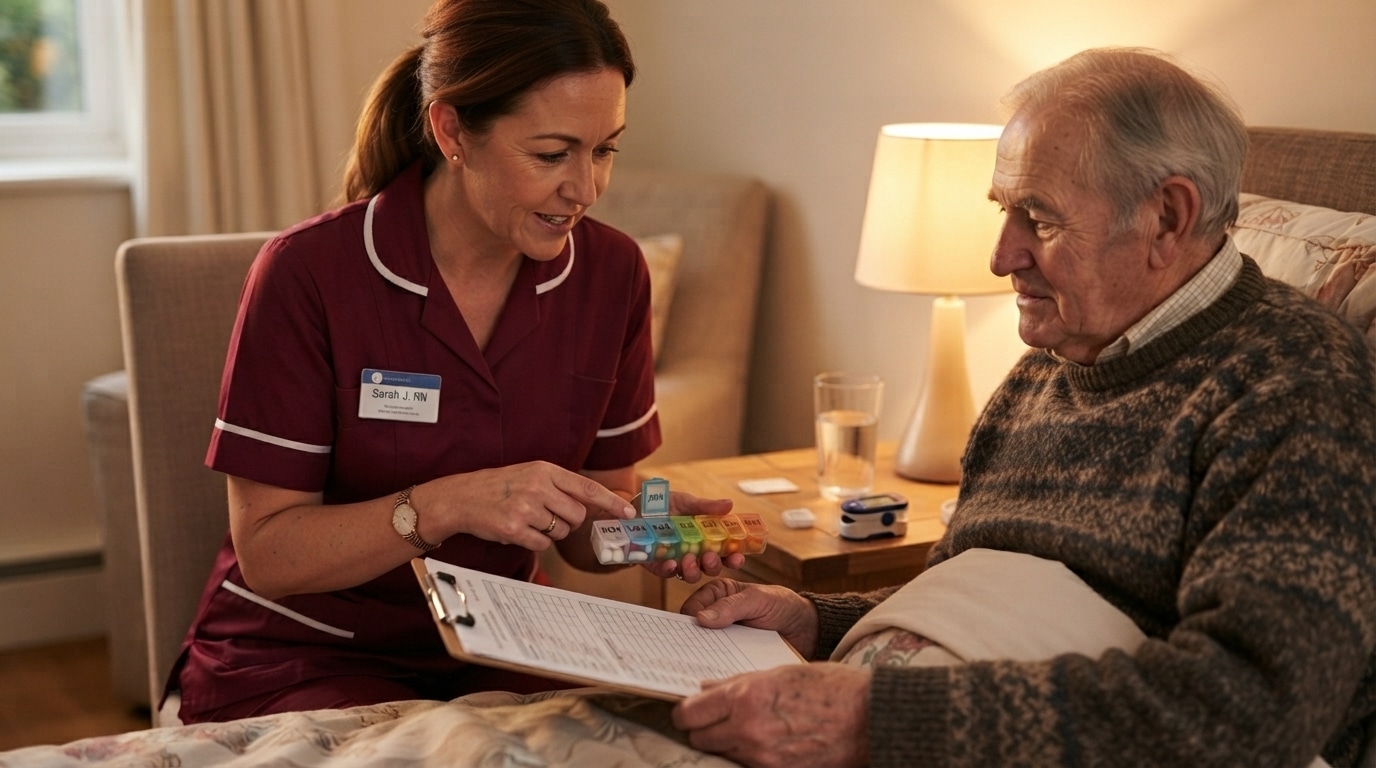
When you look for Home Care in West Sussex Costs depend on the level and frequency of support required. A single weekly companionship visit costs considerably less than daily personal care visits, which in turn costs less than full-time live-in support. Rather than working from a fixed price list, a good provider will always carry out a free assessment first, since accurate pricing depends on actual need rather than a generic package.
It’s worth budgeting for the possibility that needs — and therefore costs — may increase over time, and asking any provider directly how pricing adjusts as care needs grow.
What to Look for When Choosing a Provider
Once you’ve decided Home Care in West Sussex is the right direction, choosing the right provider matters as much as the decision itself. At minimum, check for:
- CQC registration with a Good or Outstanding rating
- DBS-checked, fully trained caregivers
- Transparent, itemised pricing
- A named local coordinator, rather than a distant call centre
- A genuinely personalised care plan, reviewed regularly rather than fixed at the outset
Take the time to ask questions during the initial assessment — a confident, specific provider is generally a good sign, while vague or evasive answers are worth probing further.
Supporting a Loved One Through the Transition
Introducing home care, even when clearly needed, can be an emotional adjustment — both for the person receiving support and for family members who’ve been managing informally until now. A few things tend to help:
- Involving your loved one in decisions where possible, rather than presenting care as something being done “to” them
- Starting with a lighter level of support and increasing gradually, rather than a large sudden change
- Being upfront about why the support is being introduced, focusing on independence and safety rather than framing it as a loss of capability
- Giving it time — new routines and new faces often feel more natural after a few weeks than they do initially
Home Care Across West Sussex
Needs and preferences vary slightly across the county. In more rural areas — West Chiltington, Pulborough, Storrington — families often prioritise a provider with strong local knowledge and shorter travel times between visits. In larger towns like Horsham and Crawley, availability of short-notice or same-day care becomes more important. Along the coast, in Chichester and the Arun district, many arrangements involve relatives who’ve moved to the area for retirement, sometimes at a distance from immediate family who want reassurance that support is genuinely local and responsive.
Wherever you’re based in West Sussex, the fundamentals of good Home Care in West Sussex remain consistent: proper registration, trained and consistent staff, transparent pricing, and a plan built around the individual rather than a fixed package.
Frequently Asked Questions
How do I start looking into home care in West Sussex? The simplest first step is arranging a free, no-obligation home assessment with a CQC-registered provider, which gives you a clear picture of options and costs without any commitment.
Is home care only for elderly people? No. While many clients are older adults, home care also supports younger adults with disabilities, people recovering from surgery or illness, and those needing short-term respite support.
Can home care start quickly if the need is urgent? Yes, many private providers can begin care within days of an assessment, considerably faster than typical council-funded timelines.
What if my loved one’s needs change after care has started? A good provider will review and adjust the care plan as needs evolve, without requiring you to start the process from scratch.
Home Care in West Sussex with ADSL Care
ADSL Care is a CQC-registered domiciliary care provider based in West Chiltington, supporting families across Horsham, Crawley, Shoreham, Chichester, Worthing, and the wider West Sussex area. Every caregiver is DBS-checked and fully trained, and every arrangement begins with a free, no-obligation assessment in your loved one’s own home — giving you a clear, pressure-free picture of what home care could look like for your family.
To find out more, call us on 01798 667012 or complete our online enquiry form.
Related posts


Write a Comment
Popular Posts


Testimonials
Recommended by a friend, very helpful and professional. The care is outstanding and the office team are very experienced and assisted me with sourcing additional funds for my mums care. Thank you ADSL Care

vincent Harrison
ADSL have fantastic carers and are a wonderful team! They have put me and my family at ease and my Mum looks forward to her daily visits. Would recommend to anyone looking for carers.

Sandra Booth
We recently changed our care agency to ADSL Care, we are very pleased with the care we receive for my mother. Care staff are caring and professional. Office staff and management are very approachable and accommodating.

Caroline Knight
We used ADSL care to help support my wife, the carers were all very lovely and caring. The office staff were very kind and answered all of our questions.

Brian Pownall