Finding the Best Live in Care Providers in West Sussex

Choosing who to trust with someone you love is rarely simple. Look for the best live in care providers and you quickly notice that every company sounds wonderful on paper. They all promise high standards, kind staff, and reliable support. But daily life at home is practical rather than polished. You need an agency that shows up on time, handles sudden changes with calm competence, and treats your relative with genuine respect.
Most families begin this after a hospital stay or when standard visiting help stops being enough. You might find your relative needs support throughout the day and reassurance during the night. Many people start with two short visits a day and increase hours as needs change, eventually moving to full-time support. Understanding what makes a provider reliable helps you cut through the marketing language and find a team that fits your family.
Table of Contents
- What Makes a Provider Truly Reliable
- Examining the Costs and Practical Options
- The Importance of Local Regulation
- Questions to Ask Before You Decide
- How Best Live In Care Providers Works Day to Day
- Signs It’s Time to Consider Best Live In Care Providers
- How Much Best Live In Care Providers Costs and What Affects the Price
- A Step-by-Step Guide to Getting Started With Best Live In Care Providers
- How to Choose the Right Option for Best Live In Care Providers
- Frequently Asked Questions
What Makes a Provider Truly Reliable
Trustworthy agencies are completely transparent about how they operate. They don’t hide behind vague promises or complicated contracts. You should expect clear information about staff training, supervision, and emergency cover. When staff complete thorough training like the Care Certificate, and many hold Level 2 or Level 3 NVQ or QCF qualifications in care, you know they understand the practical realities of supporting someone at home.
Reliable teams also manage assessments properly. Assessments happen after a hospital discharge or standard referral to understand what physical and emotional support is required. The initial visit determines whether the home care setup will fit well for both the client and the carer. After this visit, the manager leaves a printed copy of the assessment form in the home so everyone knows the plan. Assessments take place at least every 4 weeks or more frequently as care requirements depend, ensuring the support adapts as needs evolve.
Examining the Costs and Practical Options
Financing care is often a major worry for families trying to balance quality with affordability. If you’re comparing different types of support, it helps to look at Cost vs. Care: A Realistic ROI Analysis of Private vs. NHS-Funded Home Care in Chichester to understand how different funding routes work. Live-in care services start from £200 per day for one-on-one assistance, providing a dedicated presence in the home.
When you weigh up options, you might also consider whether visiting help is enough or if a full-time resident carer is necessary. You can read more about this choice in Live-In Care vs. Visiting Care: Which Private Home Care Option is Best in West Sussex?. Knowing the financial commitment helps you plan realistically without unexpected surprises down the line.
Tip: Ask potential providers how they handle staff holidays and sickness. A trustworthy agency always has a reliable plan for cover so your relative never faces an unexpected absence.

The Importance of Local Regulation
In the United Kingdom, home care agencies must be registered with the CQC. You can check their registration status directly on the CQC Registered website to read their latest inspection reports. Local experience matters just as much as national regulation. Whether you live in Pulborough, Storrington, Billingshurst, Broadbridge Heath, Steyning, or Worthing, a local provider understands the geography and community resources across West Sussex.
Local providers can typically start care within 3 to 5 working days after an assessment. This speed makes a massive difference if you’re rushing to arrange support following a sudden discharge from a hospital in West Sussex. Local managers can visit quickly, review the home environment, and put a safe routine in place.
Questions to Ask Before You Decide
Sit down with the provider and ask direct questions about their daily routines before you sign anything. You want to know how they match carers to clients based on personality and interests, rather than simple availability. Find out how they handle communication between family members and the care team. Good providers welcome these questions and answer them honestly without rushing you.
Take time to talk through your relative’s daily habits, preferences, and worries. The right provider listens carefully and builds a routine around those details. Trust grows steadily when small daily promises are kept, week after week.
Talk to ADSL Care Today
CQC-registered home care across West Sussex, from Pulborough and Horsham to Worthing and beyond.
📞 Phone: 01798 303561 | 🌐 Website: adslcare.com

How Best Live In Care Providers Works Day to Day
You might wonder what actually happens inside the house once a carer moves in. It isn’t about taking over. It’s about steady support that fits around the daily routine of the person needing help. A typical morning starts when the carer wakes up to assist with washing, dressing, and getting breakfast ready. They stay close by to help with medication and morning tasks.
As the day goes on, the carer handles household chores like laundry, cooking fresh meals, and keeping the living spaces tidy. But a big part of the day involves companionship. This means sitting down for a chat, doing puzzles, or going out for a walk in the local area. Because the carer lives in the house, they’re always on hand if someone needs a hand getting up or moving around safely.
Evenings are quieter. The carer helps with supper, evening medication, and getting ready for bed. Night support depends on the agreed plan. Some nights are completely uninterrupted, while other arrangements involve the carer waking up if assistance is required. You get a clear daily pattern that brings peace of mind to the whole family.
Signs It’s Time to Consider Best Live In Care Providers
Deciding when to bring someone into the home is rarely easy. You spot small changes over time. Maybe the house isn’t quite as clean as it used to be. Perhaps meals are missed or the fridge holds only out-of-date food. When everyday tasks start to feel too heavy, it’s worth looking at other options.
Safety is usually the biggest alarm bell. Falls around the house, forgetting to turn off the cooker, or getting confused with medication schedules mean living alone is no longer safe. If you find yourself driving over constantly to sort out emergencies or worrying through the night, the current setup isn’t working. Moving into a care home feels too drastic for many people, which is where live-in support makes sense.
Family members often feel the strain first. Burnout creeps in quietly. Juggling work, your own children, and the needs of an ageing parent leaves you exhausted. Bringing in a dedicated carer lets you step back into the role of a son or daughter. You get your weekends and evenings back, while your relative gets consistent, one-on-one attention in the comfort of their own familiar armchair.
How Much Best Live In Care Providers Costs and What Affects the Price
Money is usually the first thing on your mind when looking at care options. Live-in care pricing depends heavily on the level of daily help required. For instance, live-in care services start from £200 per day for standard one-on-one assistance. This daily rate covers the presence of a trained carer living in the home to help with daily living.
Several factors can push the final cost up or down. If someone wakes up several times during the night needing physical help, the night routine changes. Complex health conditions might mean the carer needs specific medical training, which can alter the pricing structure. Always ask the provider for a clear breakdown so you know what is included in the base rate.
You also need to think about food costs for the carer. Usually, the family provides the food for the carer while they’re on duty in the home, or a food allowance is agreed upon. Check these practical details early on so there are no surprises when the first invoice arrives.
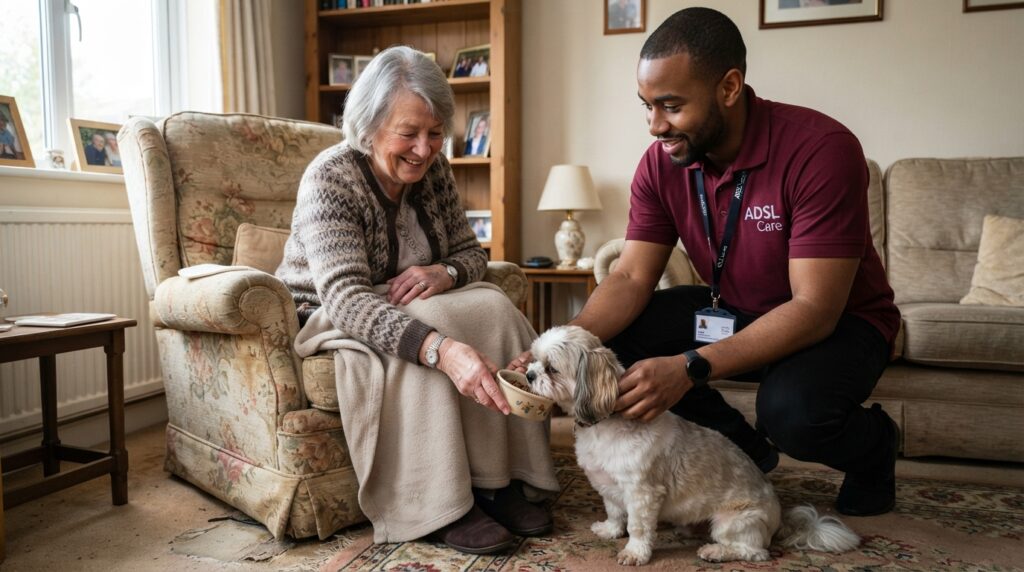
A Step-by-Step Guide to Getting Started With Best Live In Care Providers
Starting care can feel overwhelming when you’re tired and stressed. Breaking the process down into smaller steps helps keep things simple. Here is how you can move from your initial research to having a carer settled in the house:
- Make the initial contact by phone or email to discuss your situation and check basic availability.
- Arrange a face-to-face assessment, which happens after a hospital discharge or standard referral.
- Review the assessment details, as the manager leaves a printed copy of the assessment form in the home for you to read.
- Confirm the care plan and agree on the start date, keeping in mind that care can typically start within 3 to 5 working days after the assessment.
- Welcome the carer into the home and let them settle into their daily routine with your relative.
- Schedule regular reviews, noting that assessments take place at least every 4 weeks or more frequently as care requirements depend.
That final step matters a lot. Needs change over time. Regular reviews mean the care plan can adjust as your relative gets older or recovers from an illness, keeping the support level just right.
How to Choose the Right Option for Best Live In Care Providers
Choosing a care provider feels daunting when you’ve so many options on the table. You want someone reliable who treats your relative with genuine respect. Start by checking the regulatory status. A trustworthy agency should be fully registered with the Care Quality Commission, showing clear records of inspection and safety standards. Ask about their staff training. Carers ought to complete the Care Certificate as a baseline, and many will hold higher qualifications like a Level 2 or Level 3 NVQ in care.
Next, look closely at how they handle initial assessments. A proper provider sends a manager to evaluate the home setup thoroughly. This meeting usually happens after a hospital discharge or a standard referral. It helps figure out if full-time live-in support fits your relative well, or if they might do better starting with two short visits a day before increasing hours.
Keep a close eye on ongoing supervision and communication. Good agencies do not just set up care and walk away. They carry out follow-up assessments at least every four weeks, or much sooner if needs change. During these visits, the manager leaves a printed copy of the assessment form right in the home so you always know what is happening. When you speak to providers, ask them directly how often they review care plans and how they match specific carers to your relative’s personality and daily routine.
Frequently Asked Questions
How quickly can live-in care start?
We can typically start care within 3 to 5 working days after an initial assessment is completed.
How much does live-in care cost?
Live-in care services start from £200 per day for one-on-one assistance. Costs vary depending on specific care requirements.
How often are care assessments reviewed?
Assessments take place at least every 4 weeks or more frequently if care requirements change.
📋Editorial Standards: This article was drafted with the help of AI writing tools and reviewed by our care management team before publishing to ensure accuracy and compliance. If anything looks out of date, please contact us. [email protected]
Book Your Care Consultation Now
Providing professional, compassionate, and dignified home care services across West Sussex.
Related posts


Popular Posts

5 Hidden Red Flags in Home Respite Care Safety

Finding Care at Home Near Pulborough: Funding & Support

Home Care Near Pulborough vs. Residential: Which Fits?
Testimonials
Recommended by a friend, very helpful and professional. The care is outstanding and the office team are very experienced and assisted me with sourcing additional funds for my mums care. Thank you ADSL Care

vincent Harrison
ADSL have fantastic carers and are a wonderful team! They have put me and my family at ease and my Mum looks forward to her daily visits. Would recommend to anyone looking for carers.

Sandra Booth
We recently changed our care agency to ADSL Care, we are very pleased with the care we receive for my mother. Care staff are caring and professional. Office staff and management are very approachable and accommodating.

Caroline Knight
We used ADSL care to help support my wife, the carers were all very lovely and caring. The office staff were very kind and answered all of our questions.

Brian Pownall