Private Home Care in West Sussex: A Complete Family Guide to Getting the Right Support

Making the decision to arrange private home care for a loved one is rarely simple. It tends to come after weeks — sometimes months — of quiet worry, of noticing small things: a fridge that isn’t as full as it should be, a parent who sounds more tired than usual on the phone, a missed medication, a fall that was only mentioned in passing.
By the time most families reach out to a home care provider in West Sussex, they already know that something needs to change. What they don’t always know is what their options look like, what good private care actually involves, or how to tell the difference between a provider who will truly look after their loved one and one who will simply go through the motions.
This guide is written to help. It covers what private home care is, who it is for, how to choose the right provider in West Sussex, what to expect from the process, and what questions to ask before any care begins.
What Is Private Home Care?
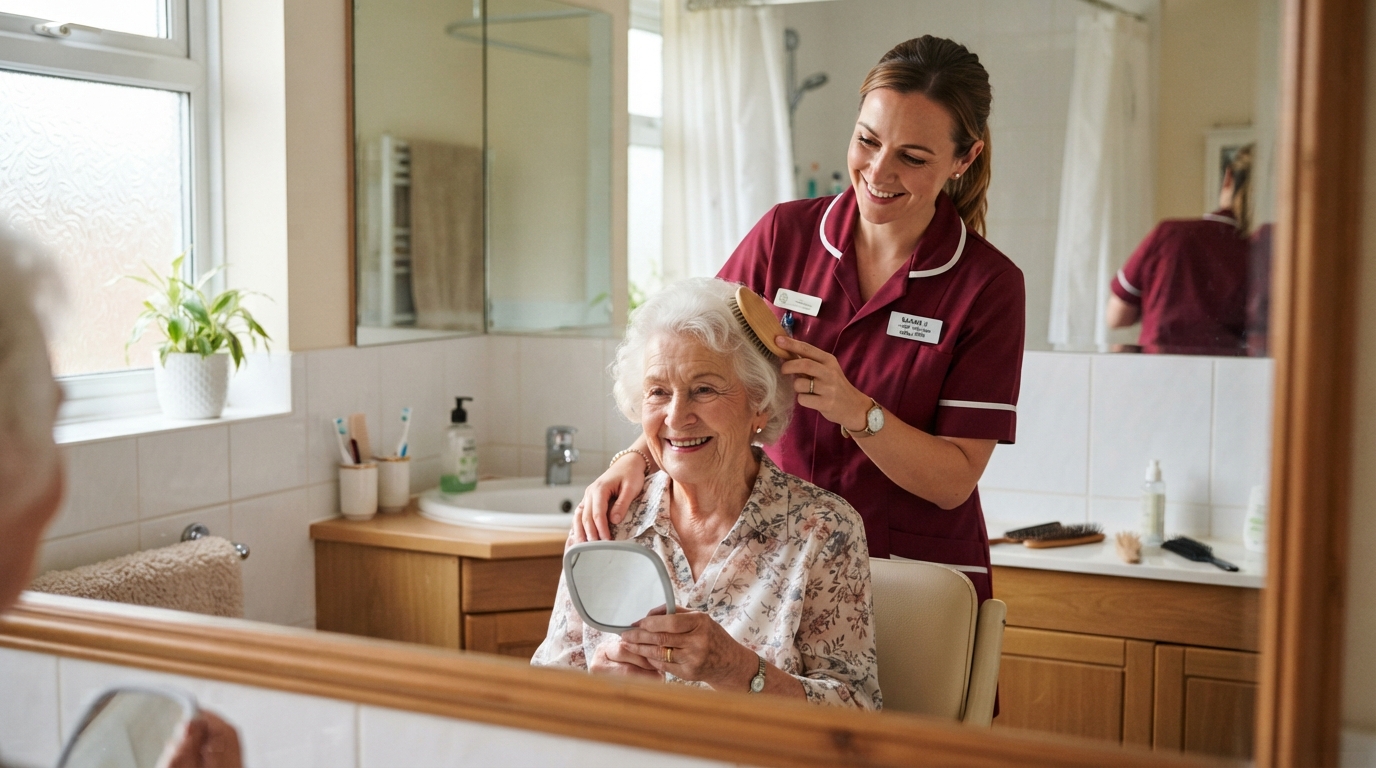
Private home care — also referred to as domiciliary care, home care, or care at home — is professional care delivered in the client’s own home, funded privately rather than through the local authority or NHS.
This distinction matters. Privately funded care gives families significantly more control over who provides care, how often, for how long, and exactly what the care involves. You are not constrained by local authority eligibility criteria, waiting lists, or a set menu of approved services. You can arrange precisely the support your loved one needs, when they need it.
Private home care can range from a single visit per week — perhaps to help with a morning routine or medication — through to daily personal care, round-the-clock live-in care, or specialist support for conditions like dementia, Parkinson’s disease, or post-stroke recovery. The level and nature of care is entirely tailored to the individual.
Who Is Private Home Care For?
Private home care in West Sussex is appropriate for a wide range of individuals and situations. You do not need to be in crisis, at an advanced stage of illness, or unable to manage entirely independently for home care to make a meaningful difference. In fact, arranging care early — before needs become urgent — often leads to significantly better outcomes.
Older Adults Living Alone
Many older adults in West Sussex live alone — in Pulborough, Storrington, Worthing, Chichester, and across the county — managing well in most respects but finding that certain aspects of daily life have become more difficult, less safe, or simply exhausting. Personal care support, meal preparation, medication reminders, and regular companionship can make the difference between genuine independence and quiet struggle.
Individuals Recovering from Illness, Surgery, or a Fall
Recovery at home is often faster and more comfortable than in a hospital or rehabilitation facility. Private home care provides the support needed during the recovery period — helping with personal care, mobility, medication, and household tasks while the individual regains their strength.
People Living with Dementia or Cognitive Decline
Dementia care at home is one of the most valuable and impactful applications of private home care. Remaining in a familiar environment, with consistent carers who know and understand the individual, can meaningfully support quality of life and slow the disorientation that cognitive decline brings.
Individuals with Long-Term Health Conditions
Conditions such as Parkinson’s disease, multiple sclerosis, stroke-related disability, or complex physical health needs often require specialist, sustained support that private home care is well-placed to provide — tailored precisely to the condition and its specific challenges.
Family Carers Who Need Regular Relief
Unpaid family carers in West Sussex provide an enormous amount of care — but they also need breaks. Respite care, arranged privately, gives family carers the time and space they need without compromising the quality of care their loved one receives.
Private home care is not a last resort. It is a proactive, high-quality choice that allows individuals to remain in the place they love most — their own home — with the right support around them.
The West Sussex Home Care Landscape: What Families Need to Know
West Sussex is a large and geographically varied county. From the urban centres of Crawley, Worthing, and Chichester to the rural communities of the Arun Valley, the South Downs villages, and the RH20 corridor — the availability, character, and cost of home care can vary considerably.
In rural areas in particular — around Pulborough, Petworth, Billingshurst, and Storrington — families sometimes find it harder to access care. Larger national care agencies may not cover these postcodes, or may do so with less frequency and less local knowledge than families would like. This is one reason why locally rooted, CQC-registered providers who genuinely know and serve the West Sussex rural corridor are particularly valuable.
CQC registration is not optional — it is a legal requirement for any provider offering personal care in England. But registration alone tells you only that a provider has met the minimum threshold to operate. The real questions are about consistency, staffing, training, the matching process, and the culture of the organisation.
What Good Private Home Care Looks Like: 7 Things to Expect
- A Thorough, In-Home Assessment: Before any care begins, a good provider will visit the client at home — not just to gather information, but to understand the person. Their daily rhythms, their preferences, their concerns, their living environment, and what matters most to them. An assessment completed over the phone, or conducted purely as a form-filling exercise, is a warning sign.
- A Bespoke Care Plan: The care plan should be written specifically for your loved one — not adapted from a template. It should detail precisely what support will be provided, how, when, and by whom. It should also be a living document: reviewed regularly and updated as needs change.
- Consistent Carer Assignment: The relationship between a client and their carer is one of the most important factors in the quality of care. Providers who rotate carers frequently, or who cannot commit to consistent assignment, are prioritising operational convenience over client welfare. Consistency is not a luxury — it is a safety and quality issue.
- Transparent Pricing: There should be no ambiguity about what care costs, what is included, and what would incur an additional charge. Reputable private home care providers in West Sussex will discuss costs fully and honestly before any care begins — and will not present surprise invoices later.
- Clear Communication with Families: Families have a right to know how their loved one’s care visits are going. Good providers maintain clear care records, proactively flag any concerns or changes in condition, and give families a named point of contact who genuinely knows their situation.
- Trained, DBS-Checked Carers: Every carer who enters your loved one’s home should be DBS-checked, appropriately trained, and supervised by a qualified care professional. Ask providers directly about their recruitment and training standards — the best ones will answer in detail and with confidence.
- A Genuine Culture of Care: The best indicator of quality is often the hardest to measure formally: does this organisation genuinely care about the people it supports? This comes through in how staff speak about their clients, how they respond to difficult conversations, and whether the people running the organisation have a clear sense of purpose beyond commercial success.
Tip: When visiting or speaking with a potential care provider, ask to speak with a family whose loved one currently receives care. A provider confident in their quality will have no hesitation making this introduction.
How the Process Works: From First Contact to First Visit
- Step 1 — Initial Conversation: Call or contact the provider. A good first conversation involves the provider listening more than they speak — understanding your situation, your concerns, and what you are hoping to achieve. There should be no sales pressure and no rushed decisions.
- Step 2 — Home Assessment: A care coordinator visits the client at home to conduct a full needs assessment. This typically takes one to two hours. The assessment covers physical care needs, medical background, daily routine, preferences, home environment, and any relevant family context.
- Step 3 — Care Plan and Agreement: The provider produces a personalised care plan and discusses it with the client and family. Once everyone is satisfied, the care agreement is signed and the schedule is confirmed.
- Step 4 — Carer Matching: The provider identifies the most appropriate carer (or carers, for more frequent visits) and, where possible, arranges a brief introductory visit before care begins.
- Step 5 — Care Begins: Visits commence according to the agreed schedule. The care coordinator checks in during the first week to make sure everything is going smoothly.
- Step 6 — Ongoing Review: Care plans are reviewed formally at regular intervals — typically every three to six months, or sooner if needs change. The family always has a direct line to the care coordinator between reviews.
Frequently Asked Questions — Private Home Care in West Sussex
How much does private home care cost in West Sussex?
Costs vary depending on the level of care, the frequency of visits, and whether live-in or visiting care is required. Visiting home care is typically charged on an hourly basis. Live-in care is usually quoted as a weekly rate. The best approach is to contact providers directly for a personalised quote — be wary of providers who quote without first conducting a proper assessment.
Can care start quickly if needed urgently?
In most cases, yes. Reputable providers can conduct an assessment within 24–48 hours and begin care very shortly after. If the situation is urgent — for example, following a hospital discharge — call directly and explain the urgency. Experienced providers are accustomed to arranging care at speed when necessary.
What if my loved one doesn’t want care?
This is extremely common and requires sensitivity. The most effective approach is usually a gradual introduction — starting with light, non-intrusive support (perhaps companionship or help with shopping) before progressing to personal care as the relationship builds. Many initially resistant clients develop genuinely warm relationships with their carers over time.
Is private home care better than a care home?
For many individuals, yes — though the right answer depends on the level of need and the individual’s preferences. Home care allows people to remain in their own environment, maintains independence and routine, provides one-to-one attention, and keeps families closely involved. Research consistently associates remaining at home with better health outcomes and higher quality of life for the majority of older adults.
Arrange Private Home Care in West Sussex
If you are exploring private home care in West Sussex for a loved one, ADSL Care is here to help. We are a CQC-registered provider serving families across the county — from Pulborough and Storrington to Horsham, Worthing, and beyond.
Call us today on 01798 667012 or visit adslcare.com for a friendly, no-obligation care assessment.
Related posts


Popular Posts


Testimonials
Recommended by a friend, very helpful and professional. The care is outstanding and the office team are very experienced and assisted me with sourcing additional funds for my mums care. Thank you ADSL Care

vincent Harrison
ADSL have fantastic carers and are a wonderful team! They have put me and my family at ease and my Mum looks forward to her daily visits. Would recommend to anyone looking for carers.

Sandra Booth
We recently changed our care agency to ADSL Care, we are very pleased with the care we receive for my mother. Care staff are caring and professional. Office staff and management are very approachable and accommodating.

Caroline Knight
We used ADSL care to help support my wife, the carers were all very lovely and caring. The office staff were very kind and answered all of our questions.

Brian Pownall